This is La Guilde's site dedicated to solidarity projects. Make a donation to The Guild
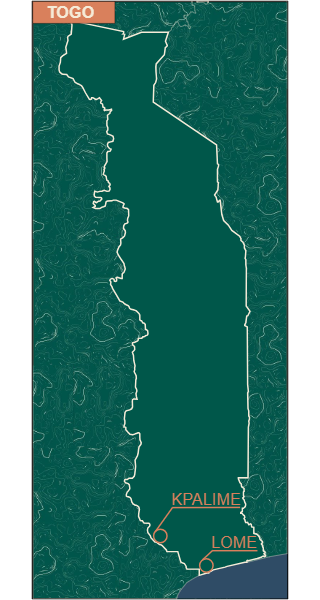
At the heart of the Plateau Region, At Togo, the young people of the Kpalimé Accommodation Center for the Blind and Visually Impaired participated in the deployment of initiatives promoting the inclusion of visually impaired people through cinema, accompanied by Kipepeo Films and numerous Togolese and French community actors.
In 2019, the’World Health Organization published his World Vision Report which reported a striking figure: More than a quarter of the world's population is visually impaired. This increases the number of affected individuals to 2.2 billion. Among them, 1 billion people have not yet been treated or could have had less severe forms of disability if they had received care earlier. As explained by the Dr. Alarcos Cieza who leads the WHO's work on this subject: "Millions of people suffer from severe visual impairments and cannot fully participate in society."«. We then speak of Disability Production Process which limits people's full potential due to social and environmental barriers (architecture, discrimination, communication, etc.). To reduce inequalities, it is necessary to try to act directly with individuals with disabilities, but also on the system in which they live.
From this overall perspective of combating the exclusion of people with disabilities, the French association Kipepeo Films led, in 2024 and 2025, a project bringing together film professionals and visually impaired young people hosted by the’association See Kpalimé, Togo. His aim was, in particular, to engage them in artistic creations to boost their self-esteem, confidence, and fully reveal their talent. Beyond simply taking action for the benefit of the recipients, this initiative placed at the heart of its approach, raising public awareness. She was planning actions to skills development This project is aimed at professionals working with young people at the center, as well as those involved in the film industry. As mentioned above, this project is a relevant example of an intervention based on the Disability Creation Process. It coordinates actions with people directly affected by disability while involving caregivers, professionals in the sector and, more broadly, society at large.. It demonstrates a comprehensive approach geared towards a wider audience.
Through audiovisual workshops conducted with associations See in Togo and the Mobile Digital Cinema Togo, 16 young people were offered a first introduction to audiovisual design and were ultimately able to create a short documentary film based on their own testimonies, each having had the opportunity to interview one of their classmates. The project generated such motivation among them that they initiated other cultural and artistic activities within the center. Following the purchase of musical instruments, one of the young people began offering music lessons to his peers. They also launched a podcast named CHAM Info which currently features 5 episodes based on debates about social issues. These activities have significantly contributed to boosting the self-esteem of young people, as evidenced by this public speaking performance by Germain, one of the project's beneficiaries, during the screening of the short film:
I'm at a loss for words to express the joy I feel. Because this project allows us to assert ourselves as individuals. It also shows us that filmmaking isn't just for able-bodied people and that we are capable of doing what others do. I would say it has allowed us to assert ourselves, to overcome our fears. Take my own experience: two years ago, I wouldn't have been able to speak in front of you.
Continuing this dynamic, the audiovisual creation workshops evolved in 2025., towards more specific sessions dedicated to accessibility to cinema. The young people thus participated in the creation of Audio-described versions, in French and Ewe, of an excerpt from the film The Little Girl Who Sold the Sun, by Djibril Diop Mambety. They were accompanied by the author of the audio-described versions. Marie Diagne (Cinema Speaks), as well as by Yassira Dermane Adam and Caled Boukari, respectively director and sound engineer within the Mobile Digital Cinema Togo, allowing them to deepen their concrete understanding of the technical and educational challenges of inclusion.
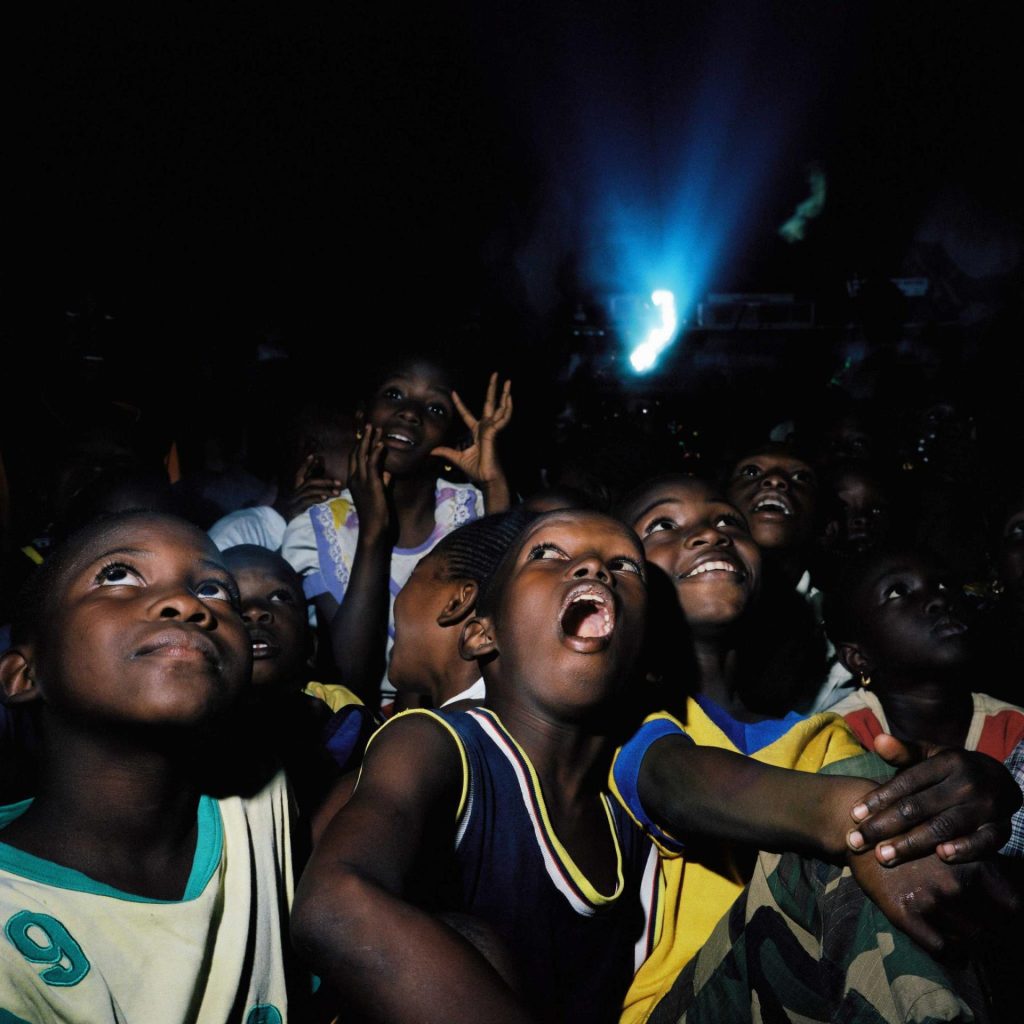
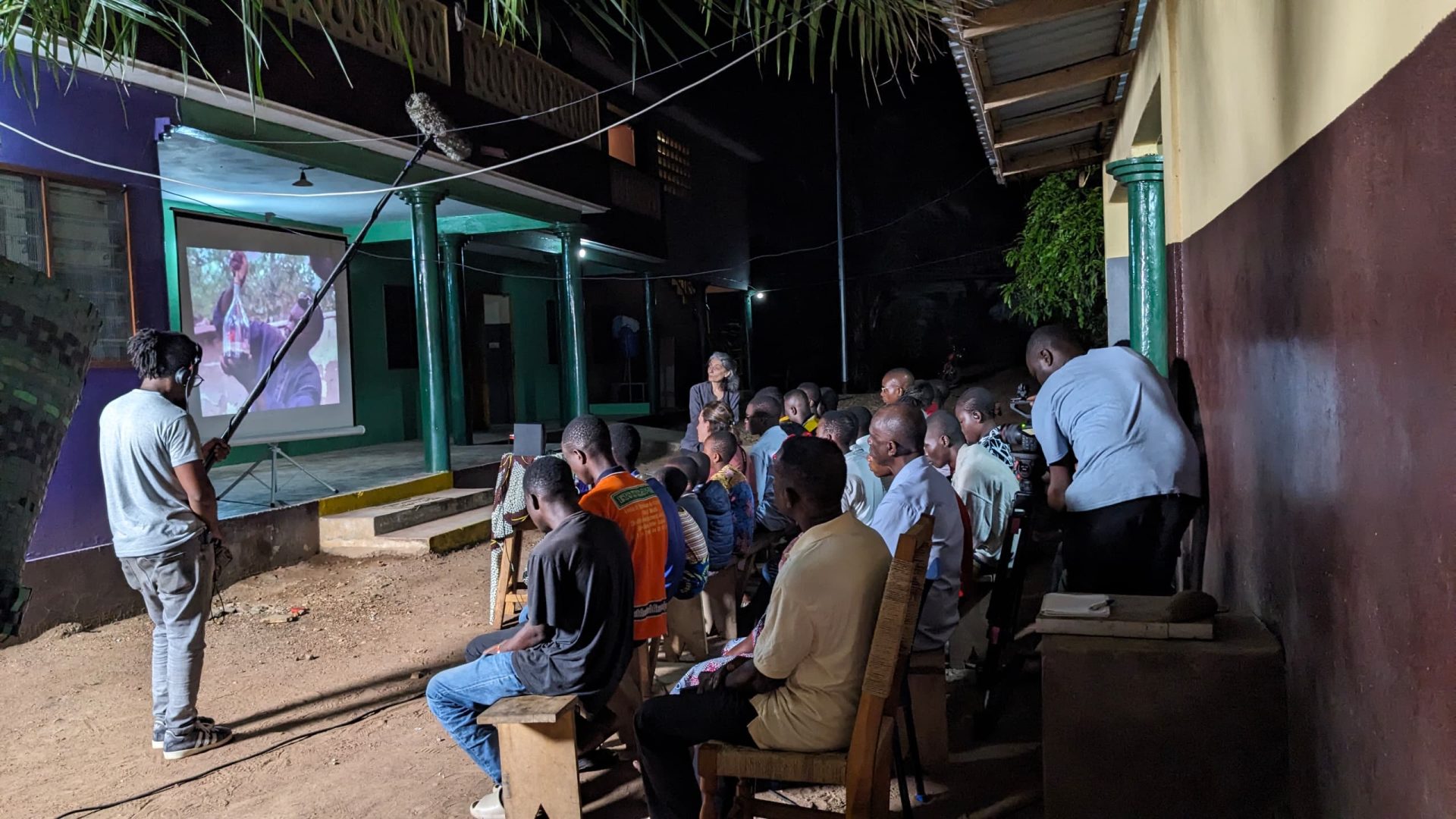
This work was extended by the organization of two screenings of African short films within the center, with live audio description provided by Marie Diagne. On this occasion, the young people themselves mobilized the villagers., promoting constructive exchanges and raising awareness among sighted audiences.
This entire process resulted in ua public presentation during the Emergence 2025 Festival in Lomé. This event constituted a historic first: it was both the first audio-described screening in sub-Saharan Africa and the first audio-described work entirely produced on the continent. Highly symbolic, this screening aroused strong emotion and raised awareness, particularly among political figures and film industry professionals present that day.
The project targeted a different category of people: film industry professionals. They were able to benefit from various workshops and masterclasses on cinema accessibility for visually impaired people and the facilitation of workshops for audiences with limited access to cultural offerings. The effects resulting from these activities are quite impressive, as these various learning and exchange opportunities have succeeded in leading to dissemination of audio description practices or, at least, the inclusion of people with disabilities in artistic fields. For example, the Togolese women filmmakers' association KATUU organized workshops on inclusion. The Togolese writer and director Dhémanane Kafechina wishes to offer readings from her famous work Illusory Happiness for visually impaired people. Professionals from Cameroon and Senegal want to get involved in audio description.. These different examples demonstrate the dynamic created around this micro-project which generates a desire to adopt inclusive practices in cinema by industry professionals and a desire to make cultural works produced in the West African region more accessible.
The youth supervisors at the reception center In Kpalimé, they were also deeply affected by this project. Previously, they did not organize artistic activities for young people. Today, things have changed since...’They assist the residents of the center in setting up socio-cultural activities. mentioned previously. They also saw each other receive educational and fun materials in order to continue to implement creative activities. There are therefore notable changes in attitudes, discourse and behaviors among the center's supervisors.
We mentioned earlier the importance of being able to act on a range of stakeholders to limit the process of disability creation. This project is an excellent example of concrete actions that can be implemented to combat this. By drawing on artistic and cultural creation, it demonstrates how access to culture can be a powerful lever for personal development: it allows young people to to strengthen their self-esteem, their self-confidence and their ability to speak about their own experiences. This allows them to be able to raise awareness among other people about what they are experiencing. They are reinforced by educators which foster this environment of artistic and cultural production. In addition, there is a network of aware and trained professionals. on the issues surrounding inclusion in cinema and allows a much broader awareness among the general public. Even through a micro-project, the effects on the ground can be very strong and generate much broader development dynamics.
The "inner eye" is a talent developed in childhood. Even with our eyes closed, we can immediately detect sounds. As in the film, someone pointed out that even if their grandmother is blind, all you have to do is cough near her and she'll know who it is. So it's something we also develop. Even without sight, we manage to develop these "inner eyes," which aren't just for seeing, but for detecting everything around us.
Benjamin, a young participant in the workshops